travel

DID ANCIENT CIVILIZATIONS USE STARGATES TO TRAVEL THROUGH UNIVERSE?


Humans have long been obsessed with the possibility of alternate universes, and a way to instantaneously travel between this one and the next. This concept was popularized by the science-fiction TV show Stargate, and as recently as 2015, NASA admitted to having spent at least a decade researching access points to places outside our world, our universe, even beyond space and…


Humans have long been obsessed with the possibility of alternate universes, and a way to instantaneously travel between this one and the next. This concept was popularized by the science-fiction TV show Stargate, and as recently as 2015, NASA admitted to having spent at least a decade researching access points to places outside our world, our universe, even beyond space and…


Humans have long been obsessed with the possibility of alternate universes, and a way to instantaneously travel between this one and the next. This concept was popularized by the science-fiction TV show Stargate, and as recently as 2015, NASA admitted to having spent at least a decade researching access points to places outside our world, our universe, even beyond space and…


Humans have long been obsessed with the possibility of alternate universes, and a way to instantaneously travel between this one and the next. This concept was popularized by the science-fiction TV show Stargate, and as recently as 2015, NASA admitted to having spent at least a decade researching access points to places outside our world, our universe, even beyond space and time as we know it.

The term Stargate means just that: an otherworldly door or portal to outside realms, hidden within Earth’s and space’s magnetic fields, waiting to transport the enlightened traveler to a place beyond current time limitations. While space seems to be the most likely location for these doorways to other universes, many places on planet Earth have also been attributed with special transportive capabilities, as well as noticeable shifts in energy, different frequencies, and unexplained lights or sounds.

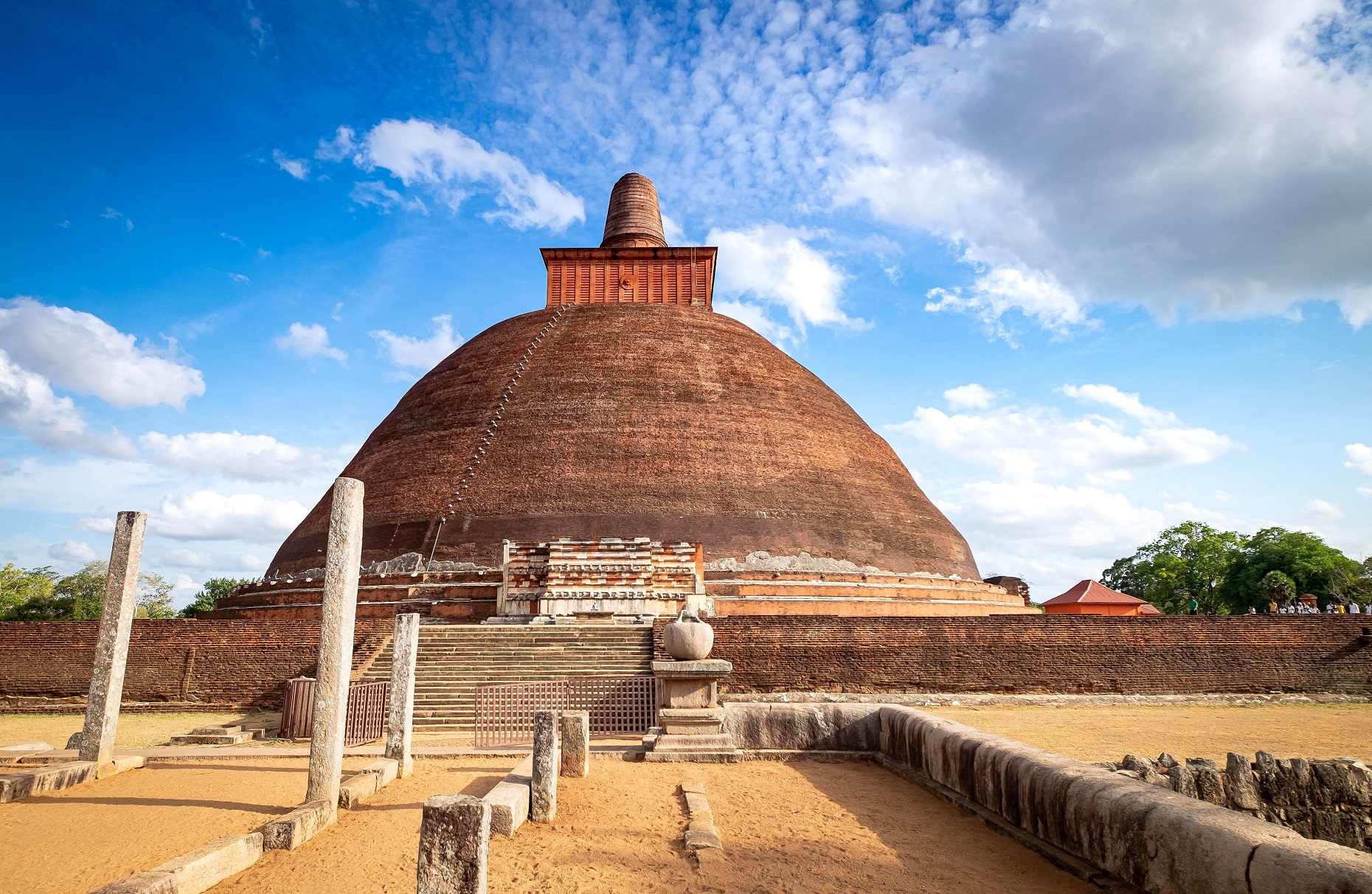
Sri Lanka’s sacred city of Anuradhapura is an unlikely place to be enmeshed in a fantastic tale of UFOs and otherworldly happenings. Locally known as Rajarata (Land of Kings), the Unesco World Heritage Site was the first established kingdom on the island (in 377 BC) and is at the heart of Sri Lanka’s Buddhist culture. Today, it’s one of the nation’s most visited places, attracting devoted pilgrims from around the country to its ancient Buddhist temples and giant dome-shaped stupas.

But this holy city is also home to something far more curious. Here, in Ranmasu Uyana (Golden Fish Park), a 40-acre ancient urban park surrounded by three Buddhist temples, is a chart that’s alleged to be a map to unlock the secrets of the Universe.

Measuring around 1.8m in diameter, Sakwala Chakraya (which translates to “Universe Cycle” in Sinhalese) is shallowly carved onto a low rock face among the protected park ruins. Its front facade can only be seen from ground level. In fact, four seats have been sculpted into a flat rock surface opposite that provide the ideal viewing area. Both the map and seats, which are also of mysterious origin, have puzzled historians, archaeologists and academics for more than a century.

When compared to other carvings from the same period such as the Sandakada Pahana, which depicts vines, swans and a lotus, all typical of Buddhist iconography, the chart is without religious context, leaving it without an obvious explanation as to why it is here.

Conspiracy theorists noted that the stargate of Anuradhapura had near-identical shapes and symbols to those found at Abu Ghurab in Egypt and La Puerta de Hayu Marka in Peru. The most striking similarity, it was said, as speculation around Sri Lanka’s stargate reached its peak, is its proximity to water. The nearby Tissa Weva reservoir, built in 300 BC, has been thrown around as conclusive evidence, since both Abu Ghurab and La Puerta de Hayu Marka were also built near water, which, according to the stargate theory, allowed extra-terrestrial beings to process gold from Earth’s water.

This otherworldly theory has been further fuelled by the chart’s proximity to Danigala mountain, also known as Alien Mountain, in the nearby sacred city of Polonnaruwa. Danigala, which lies deep in the jungle and is popular with hikers, has a unique circular shape and entirely flat top. This led internet sleuths to conclude that it must have, at one time, been used for UFO landings. Strangely, according to Sri Abeywickrama, a local tour guide, “villagers in the area do believe that Alien Mountain attracts more shooting stars and thunder and lightning above it than anywhere else.”

However, according to Somadeva, “There is little archaeologically to suggest that it’s a stargate.” Instead, Somadeva believes a more sensible conclusion is that the chart is an early map of the world, as suggested by Bell, because that explanation has religious and cosmological context that is logical, given the period and place in time.

According to Somadeva, “At least since 250 BCE, Sri Lankans had a clear idea of objects in the sky and outer space. In early Brahmi inscriptions, found in Sri Lanka, there are a number of names that refer to specific stars and concepts related to astronomy. One of the inscriptions in Kirinda, a religious and historic site on Sri Lanka’s southern coast, contains the phrase ‘aparimita loka datuya‘ meaning ‘the infinite universe’. What it suggests is that the person who engraved it had a very good understanding of the nature of the universe they lived in.”


Humans have long been obsessed with the possibility of alternate universes, and a way to instantaneously travel between this one and the next. This concept was popularized by the science-fiction TV show Stargate, and as recently as 2015, NASA admitted to having spent at least a decade researching access points to places outside our world, our universe, even beyond space and…


Humans have long been obsessed with the possibility of alternate universes, and a way to instantaneously travel between this one and the next. This concept was popularized by the science-fiction TV show Stargate, and as recently as 2015, NASA admitted to having spent at least a decade researching access points to places outside our world, our universe, even beyond space and…

MAGNIFICENT “LION FORTRESS” EMBODIES ONE OF THE BEST-PRESERVED EXAMPLES OF ANCIENT SRI LANKAN URBAN PLANNING

Perched on a slab of rock that juts dramatically over the forests of central Sri Lanka, Sigiriya is as imposing a sight now as it must have been when it was first built by a fierce king in the fifth century A.D. Meaning “lion’s rock,” Sigiriya (designated a UNESCO world heritage site in 1982) is accessed by way of passageways cut into…

Perched on a slab of rock that juts dramatically over the forests of central Sri Lanka, Sigiriya is as imposing a sight now as it must have been when it was first built by a fierce king in the fifth century A.D. Meaning “lion’s rock,” Sigiriya (designated a UNESCO world heritage site in 1982) is accessed by way of passageways cut into…

Perched on a slab of rock that juts dramatically over the forests of central Sri Lanka, Sigiriya is as imposing a sight now as it must have been when it was first built by a fierce king in the fifth century A.D. Meaning “lion’s rock,” Sigiriya (designated a UNESCO world heritage site in 1982) is accessed by way of passageways cut into…

Perched on a slab of rock that juts dramatically over the forests of central Sri Lanka, Sigiriya is as imposing a sight now as it must have been when it was first built by a fierce king in the fifth century A.D. Meaning “lion’s rock,” Sigiriya (designated a UNESCO world heritage site in 1982) is accessed by way of passageways cut into the rock face between a monumental pair of lion paws.

The fortress was later swallowed by the forest, and only familiar to local villagers. Outsiders used knowledge of its past, preserved in Buddhist texts, to search for the ancient site. British historians rediscovered its astonishing buildings and frescoes in the 19th century.

Kingdom to colony

Sigiriya was built by the fifth-century king Kashyapa I, who ruled the native Sinhalese dynasty, the Moriya. The imposing fortress was the capital of the Sinhalese kingdom until Kashyapa was defeated in A.D. 495.

After Kashyapa, dynasties rose and fell, their fortunes shaped by internal power struggles and conflicts between native Sinhalese and outside invaders from India.

The Mahavamsa, a fifth-century Sri Lankan epic, tells how the Indian prince Vijaya was the grandson of a lion. He traveled to the island of Sri Lanka and married Princess Kuveni. From their union was born the Sinhalese race (sinhala means “of lions”). In the Sinhalese tradition, the lion is the mythical ancestor of kings and a symbol of royal authority. The photograph shows what remains of the monumental Lion Paws Gate at Sigiriya.

Various cities held the status of capital after Sigiriya, such as Polonnaruwa. By the 12th century, however, overall control of Sri Lanka progressively weakened. Sinhalese power retreated to the southwest of the island, abandoning the Rajarata region, and the former administrative centers, including Sigiriya, started to fall into disuse.

Sri Lanka’s position in the Indian Ocean made it vulnerable to Europeans looking to expand their control in the region. By the mid-1500s the Portuguese had thoroughly exploited dynastic tensions in Sri Lanka’s ruling elite and controlled much of the island.

A century later the Dutch had replaced the Portuguese as colonial masters, and they were in turn displaced by the British in the late 1700s. By 1815 the Kingdom of Kandy, the last independent, native state on the island, became part of the British Empire.

The design of the garden on the western esplanade at Sigiriya contrasts rigid rectilinear lines with the rounded natural forms of the surrounding greenery.

Knowledge is power

British imperial rule brought civil servant George Turnour to the island. An aristocrat, scholar, and passionate historian, Turnour worked with a Buddhist monk to translate an ancient fifth-century chronicle, the Mahavamsa, from the Sri Lankan Pali language into English. Based on this and other texts, he identified two ancient capitals: Anuradhapura and Polonnaruwa.

Turnour also studied a later chronicle of Sri Lankan history, the Culavamsa, which told the story of King Kashyapa. In the late fifth century, this Sinhalese prince killed his father, King Dhatusena, and seized the throne, usurping his brother, who fled to India. Fearing reprisals, he built the fortress Sigiriya—but in vain: His brother returned, defeating Kashyapa, and Sigiriya lost its brief status as capital.

The 40-foot-high Avukana Buddha in Sri Lanka was carved in the fifth century, the same period in which nearby Sigiriya was built.

In 1827 a Scottish officer, Jonathan Forbes, became friends with Turnour, and on hearing the story of Kashyapa and his palace, decided to look for it. In 1831 he set off to where locals told him he would find the remains of an ancient city.

His memoir, Eleven Years in Ceylon, describes “the rock of Sigiri, . . . frowning defiance over the scanty fields and the far-extending forest of the surrounding plain.” As he approached, he could see platforms and galleries carved into the rock. Two of his party managed to scramble some way up but dislodged rocks, “which crashed among the boughs of the trees at a great depth below.”

Unsure as to whether he had found the Sigiriya mentioned in the Buddhist texts, Forbes abandoned the expedition. Revisiting a few years later, he traced the moat that surrounds the gardens at the foot of the rock but did not attempt to climb the cliff face. He doubted that the name Sigiriya was related to lions, as he had seen nothing to support that etymology.

Fabulous frescoes

British mountaineers eventually reached the top in 1851, but the task of surveying the site fell to the Archaeological Commissioner of Ceylon, Harry C.P. Bell. His survey at the end of the 19th century has formed the basis of all studies since.

ON EARTH OR IN HEAVEN?

Graffiti left by medieval travelers to Sigiriya are responses to the site’s extraordinary rock paintings depicting beautiful women dancing and bearing offerings. One notes: “The caress of the gentle breeze was delicate upon their bodies, illuminated by the light of the m…Read More

Bell painstakingly ascertained the layout of Kashyapa’s fantastical city as well as detailed the magnificent carving of the lion’s paws at the entrance, which Forbes had not been able to see.

In addition to the elaborate water gardens at the foot of the rock, Bell’s survey also lavished attention on the galleries on the rock face. These are decorated with exquisite wall paintings that have become some of the most prized objects in Sri Lanka’s artistic heritage. A total of 21 surviving frescoes may depict apsaras, celestial singers and dancers.

Nearby, also on the walls of the rock face, are well over 1,000 items of graffiti, scratched by monks and pilgrims who visited the site in the eighth to the 13th centuries. These messages from the past can cause a frisson when read by visitors today. One reads: “At Sigiriya, of abundant splendor, situated on the island of [Sri Lanka] we saw, in happy mood, the rock that captivates the mind of all people who come here.”

Perched on a slab of rock that juts dramatically over the forests of central Sri Lanka, Sigiriya is as imposing a sight now as it must have been when it was first built by a fierce king in the fifth century A.D. Meaning “lion’s rock,” Sigiriya (designated a UNESCO world heritage site in 1982) is accessed by way of passageways cut into…

Perched on a slab of rock that juts dramatically over the forests of central Sri Lanka, Sigiriya is as imposing a sight now as it must have been when it was first built by a fierce king in the fifth century A.D. Meaning “lion’s rock,” Sigiriya (designated a UNESCO world heritage site in 1982) is accessed by way of passageways cut into…

WHY VISIT SRI LANKA OVER OTHER COUNTRIES?

A visit to rising ecotourism star Sri Lanka is kind of like having the best of Africa and Asia all rolled into a single easy-to-get-around island. Herds of Asian elephants specific to Sri Lanka roam, leopards frequent the southern forests, and rare gray slender lorises—among the smallest primates on Earth—present bucket-list-worthy wildlife-viewing opportunities.

Cultural heritage also reigns supreme here, from ancient Buddhist…

A visit to rising ecotourism star Sri Lanka is kind of like having the best of Africa and Asia all rolled into a single easy-to-get-around island. Herds of Asian elephants specific to Sri Lanka roam, leopards frequent the southern forests, and rare gray slender lorises—among the smallest primates on Earth—present bucket-list-worthy wildlife-viewing opportunities.

Cultural heritage also reigns supreme here, from ancient Buddhist…

A visit to rising ecotourism star Sri Lanka is kind of like having the best of Africa and Asia all rolled into a single easy-to-get-around island. Herds of Asian elephants specific to Sri Lanka roam, leopards frequent the southern forests, and rare gray slender lorises—among the smallest primates on Earth—present bucket-list-worthy wildlife-viewing opportunities.

Cultural heritage also reigns supreme here, from ancient Buddhist…

A visit to rising ecotourism star Sri Lanka is kind of like having the best of Africa and Asia all rolled into a single easy-to-get-around island. Herds of Asian elephants specific to Sri Lanka roam, leopards frequent the southern forests, and rare gray slender lorises—among the smallest primates on Earth—present bucket-list-worthy wildlife-viewing opportunities.

Cultural heritage also reigns supreme here, from ancient Buddhist kingdoms that left behind vast archeological treasures to vibrantly vital Hindu festivals like Kataragama that draw thousands of spiritual devotees each year.

Plethora of beaches, each of which provides unique experiences and excursions throughout the year. This island nation is packed with adventures activities for any traveller who’s looking for an adrenaline rush.

Why Choose Ceylon Trailblazer?

Expertise

You’re in safe hands with experience spanning five decades, from our humble beginnings since 1974.

Tailor-made

To personal travel appetites, whether it’s adrenaline packed adventures or sipping margaritas on serene beaches. Whatever you’re looking for, we’ve got you covered.

Accredited

Rest assured, we’re among a select group of companies certified by the Sri Lanka Tourism Development Authority.

Affordable

Your dream holiday made a reality by our nationwide partnership network helping us deliver the best rates, keeping your bank account happy.

Hassle-free

Our team personally picks the best hotels and attractions and arranges the entire tour. Simply enjoy in comfort, while we toil behind the scenes for you.

Travel is our forte

Travel is and will always be our priority. We are passionate, not just about travelling ourselves, but making it enjoyable for you.

We care

Travel that does not concern itself with the world is irresponsible. We look into the most eco-friendly hotels, modes of travel and business processes for a sustainable future.

Attention to detail

We believe in nitpicking. Many tiny details collectively create the perfect vacation. We look into each and every need, to ensure that your vacation meets your expectations.

A visit to rising ecotourism star Sri Lanka is kind of like having the best of Africa and Asia all rolled into a single easy-to-get-around island. Herds of Asian elephants specific to Sri Lanka roam, leopards frequent the southern forests, and rare gray slender lorises—among the smallest primates on Earth—present bucket-list-worthy wildlife-viewing opportunities.

Cultural heritage also reigns supreme here, from ancient Buddhist…

A visit to rising ecotourism star Sri Lanka is kind of like having the best of Africa and Asia all rolled into a single easy-to-get-around island. Herds of Asian elephants specific to Sri Lanka roam, leopards frequent the southern forests, and rare gray slender lorises—among the smallest primates on Earth—present bucket-list-worthy wildlife-viewing opportunities.

Cultural heritage also reigns supreme here, from ancient Buddhist…

IS IT SAFE TO TRAVEL TO SRI LANKA RIGHT NOW?

In 2022, Sri Lanka experienced an economic crisis which led to shortages of fuel, cooking gas and food, the country went through regular power outages due to electricity rationing.

However, these shortages are fading away as the economy is on a path to improvement. Since the tourism industry is one of the main sources of foreign income for the government, there are…

In 2022, Sri Lanka experienced an economic crisis which led to shortages of fuel, cooking gas and food, the country went through regular power outages due to electricity rationing.

However, these shortages are fading away as the economy is on a path to improvement. Since the tourism industry is one of the main sources of foreign income for the government, there are…

In 2022, Sri Lanka experienced an economic crisis which led to shortages of fuel, cooking gas and food, the country went through regular power outages due to electricity rationing.

However, these shortages are fading away as the economy is on a path to improvement. Since the tourism industry is one of the main sources of foreign income for the government, there are…

In 2022, Sri Lanka experienced an economic crisis which led to shortages of fuel, cooking gas and food, the country went through regular power outages due to electricity rationing.

However, these shortages are fading away as the economy is on a path to improvement. Since the tourism industry is one of the main sources of foreign income for the government, there are incentives in place in order for tourists to experience Sri Lanka without any hassle. This means there’s no power interruptions to tourist areas, with other areas affected for an hour a day. The Government is sparing fuel for the tourism sector granting higher fuel quotas for tourism related businesses.

A Few things to do before you visit,

  • Pick a well-established travel partner like Ceylon Trailblazer, who has the means to accommodate your needs during your vacation.
  • Talk to your travel partner and ask all the questions you might have. This way you can access their knowledge as well.
  • Plan your tour to meet your needs and make it a tailor made tour just for you.

In 2022, Sri Lanka experienced an economic crisis which led to shortages of fuel, cooking gas and food, the country went through regular power outages due to electricity rationing.

However, these shortages are fading away as the economy is on a path to improvement. Since the tourism industry is one of the main sources of foreign income for the government, there are…

In 2022, Sri Lanka experienced an economic crisis which led to shortages of fuel, cooking gas and food, the country went through regular power outages due to electricity rationing.

However, these shortages are fading away as the economy is on a path to improvement. Since the tourism industry is one of the main sources of foreign income for the government, there are…

Translate »