Archives June 2019

DID ANCIENT CIVILIZATIONS USE STARGATES TO TRAVEL THROUGH UNIVERSE?


Humans have long been obsessed with the possibility of alternate universes, and a way to instantaneously travel between this one and the next. This concept was popularized by the science-fiction TV show Stargate, and as recently as 2015, NASA admitted to having spent at least a decade researching access points to places outside our world, our universe, even beyond space and…


Humans have long been obsessed with the possibility of alternate universes, and a way to instantaneously travel between this one and the next. This concept was popularized by the science-fiction TV show Stargate, and as recently as 2015, NASA admitted to having spent at least a decade researching access points to places outside our world, our universe, even beyond space and…


Humans have long been obsessed with the possibility of alternate universes, and a way to instantaneously travel between this one and the next. This concept was popularized by the science-fiction TV show Stargate, and as recently as 2015, NASA admitted to having spent at least a decade researching access points to places outside our world, our universe, even beyond space and…


Humans have long been obsessed with the possibility of alternate universes, and a way to instantaneously travel between this one and the next. This concept was popularized by the science-fiction TV show Stargate, and as recently as 2015, NASA admitted to having spent at least a decade researching access points to places outside our world, our universe, even beyond space and time as we know it.

The term Stargate means just that: an otherworldly door or portal to outside realms, hidden within Earth’s and space’s magnetic fields, waiting to transport the enlightened traveler to a place beyond current time limitations. While space seems to be the most likely location for these doorways to other universes, many places on planet Earth have also been attributed with special transportive capabilities, as well as noticeable shifts in energy, different frequencies, and unexplained lights or sounds.

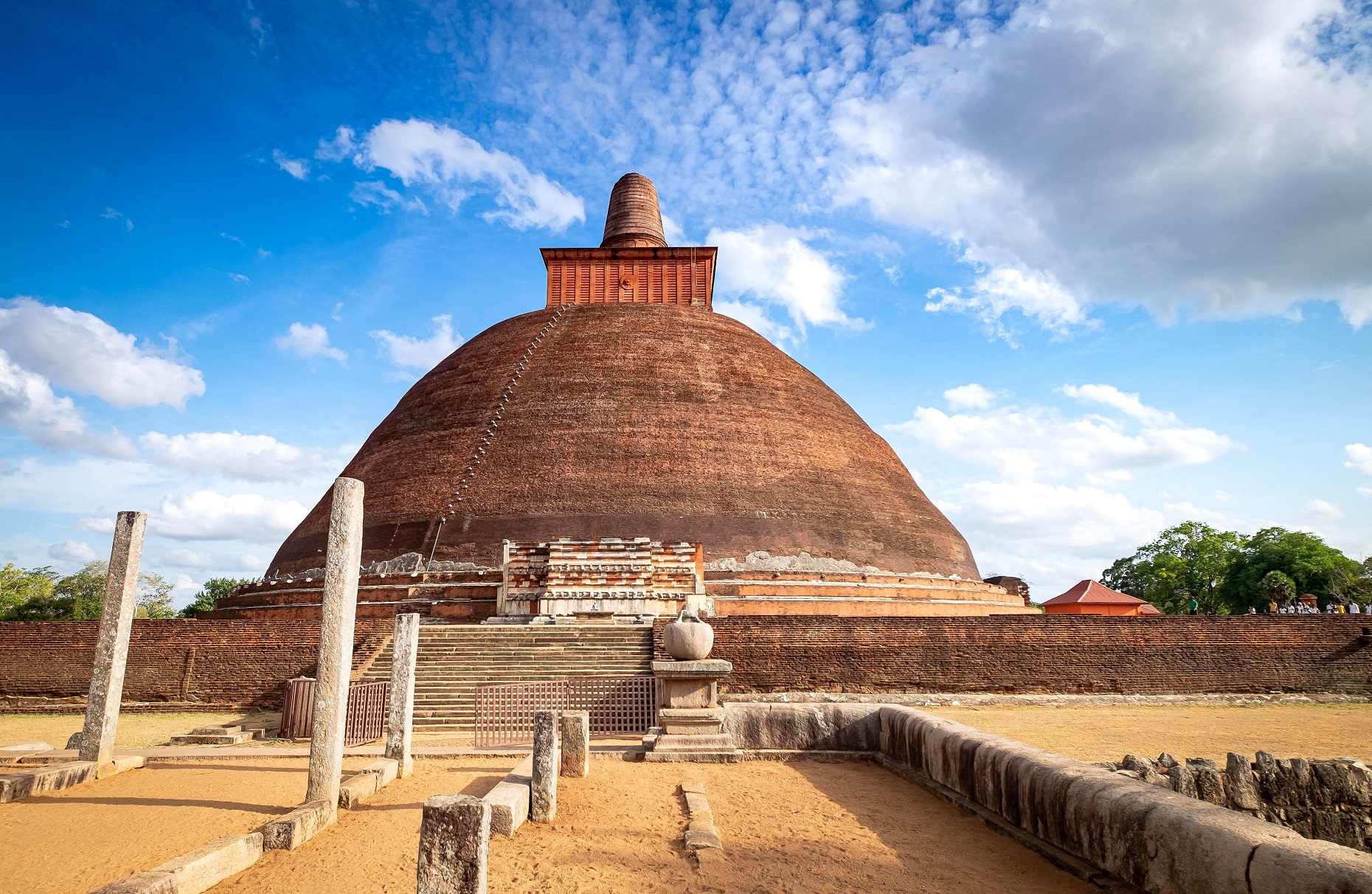
Sri Lanka’s sacred city of Anuradhapura is an unlikely place to be enmeshed in a fantastic tale of UFOs and otherworldly happenings. Locally known as Rajarata (Land of Kings), the Unesco World Heritage Site was the first established kingdom on the island (in 377 BC) and is at the heart of Sri Lanka’s Buddhist culture. Today, it’s one of the nation’s most visited places, attracting devoted pilgrims from around the country to its ancient Buddhist temples and giant dome-shaped stupas.

But this holy city is also home to something far more curious. Here, in Ranmasu Uyana (Golden Fish Park), a 40-acre ancient urban park surrounded by three Buddhist temples, is a chart that’s alleged to be a map to unlock the secrets of the Universe.

Measuring around 1.8m in diameter, Sakwala Chakraya (which translates to “Universe Cycle” in Sinhalese) is shallowly carved onto a low rock face among the protected park ruins. Its front facade can only be seen from ground level. In fact, four seats have been sculpted into a flat rock surface opposite that provide the ideal viewing area. Both the map and seats, which are also of mysterious origin, have puzzled historians, archaeologists and academics for more than a century.

When compared to other carvings from the same period such as the Sandakada Pahana, which depicts vines, swans and a lotus, all typical of Buddhist iconography, the chart is without religious context, leaving it without an obvious explanation as to why it is here.

Conspiracy theorists noted that the stargate of Anuradhapura had near-identical shapes and symbols to those found at Abu Ghurab in Egypt and La Puerta de Hayu Marka in Peru. The most striking similarity, it was said, as speculation around Sri Lanka’s stargate reached its peak, is its proximity to water. The nearby Tissa Weva reservoir, built in 300 BC, has been thrown around as conclusive evidence, since both Abu Ghurab and La Puerta de Hayu Marka were also built near water, which, according to the stargate theory, allowed extra-terrestrial beings to process gold from Earth’s water.

This otherworldly theory has been further fuelled by the chart’s proximity to Danigala mountain, also known as Alien Mountain, in the nearby sacred city of Polonnaruwa. Danigala, which lies deep in the jungle and is popular with hikers, has a unique circular shape and entirely flat top. This led internet sleuths to conclude that it must have, at one time, been used for UFO landings. Strangely, according to Sri Abeywickrama, a local tour guide, “villagers in the area do believe that Alien Mountain attracts more shooting stars and thunder and lightning above it than anywhere else.”

However, according to Somadeva, “There is little archaeologically to suggest that it’s a stargate.” Instead, Somadeva believes a more sensible conclusion is that the chart is an early map of the world, as suggested by Bell, because that explanation has religious and cosmological context that is logical, given the period and place in time.

According to Somadeva, “At least since 250 BCE, Sri Lankans had a clear idea of objects in the sky and outer space. In early Brahmi inscriptions, found in Sri Lanka, there are a number of names that refer to specific stars and concepts related to astronomy. One of the inscriptions in Kirinda, a religious and historic site on Sri Lanka’s southern coast, contains the phrase ‘aparimita loka datuya‘ meaning ‘the infinite universe’. What it suggests is that the person who engraved it had a very good understanding of the nature of the universe they lived in.”


Humans have long been obsessed with the possibility of alternate universes, and a way to instantaneously travel between this one and the next. This concept was popularized by the science-fiction TV show Stargate, and as recently as 2015, NASA admitted to having spent at least a decade researching access points to places outside our world, our universe, even beyond space and…


Humans have long been obsessed with the possibility of alternate universes, and a way to instantaneously travel between this one and the next. This concept was popularized by the science-fiction TV show Stargate, and as recently as 2015, NASA admitted to having spent at least a decade researching access points to places outside our world, our universe, even beyond space and…

MAGNIFICENT “LION FORTRESS” EMBODIES ONE OF THE BEST-PRESERVED EXAMPLES OF ANCIENT SRI LANKAN URBAN PLANNING

Perched on a slab of rock that juts dramatically over the forests of central Sri Lanka, Sigiriya is as imposing a sight now as it must have been when it was first built by a fierce king in the fifth century A.D. Meaning “lion’s rock,” Sigiriya (designated a UNESCO world heritage site in 1982) is accessed by way of passageways cut into…

Perched on a slab of rock that juts dramatically over the forests of central Sri Lanka, Sigiriya is as imposing a sight now as it must have been when it was first built by a fierce king in the fifth century A.D. Meaning “lion’s rock,” Sigiriya (designated a UNESCO world heritage site in 1982) is accessed by way of passageways cut into…

Perched on a slab of rock that juts dramatically over the forests of central Sri Lanka, Sigiriya is as imposing a sight now as it must have been when it was first built by a fierce king in the fifth century A.D. Meaning “lion’s rock,” Sigiriya (designated a UNESCO world heritage site in 1982) is accessed by way of passageways cut into…

Perched on a slab of rock that juts dramatically over the forests of central Sri Lanka, Sigiriya is as imposing a sight now as it must have been when it was first built by a fierce king in the fifth century A.D. Meaning “lion’s rock,” Sigiriya (designated a UNESCO world heritage site in 1982) is accessed by way of passageways cut into the rock face between a monumental pair of lion paws.

The fortress was later swallowed by the forest, and only familiar to local villagers. Outsiders used knowledge of its past, preserved in Buddhist texts, to search for the ancient site. British historians rediscovered its astonishing buildings and frescoes in the 19th century.

Kingdom to colony

Sigiriya was built by the fifth-century king Kashyapa I, who ruled the native Sinhalese dynasty, the Moriya. The imposing fortress was the capital of the Sinhalese kingdom until Kashyapa was defeated in A.D. 495.

After Kashyapa, dynasties rose and fell, their fortunes shaped by internal power struggles and conflicts between native Sinhalese and outside invaders from India.

The Mahavamsa, a fifth-century Sri Lankan epic, tells how the Indian prince Vijaya was the grandson of a lion. He traveled to the island of Sri Lanka and married Princess Kuveni. From their union was born the Sinhalese race (sinhala means “of lions”). In the Sinhalese tradition, the lion is the mythical ancestor of kings and a symbol of royal authority. The photograph shows what remains of the monumental Lion Paws Gate at Sigiriya.

Various cities held the status of capital after Sigiriya, such as Polonnaruwa. By the 12th century, however, overall control of Sri Lanka progressively weakened. Sinhalese power retreated to the southwest of the island, abandoning the Rajarata region, and the former administrative centers, including Sigiriya, started to fall into disuse.

Sri Lanka’s position in the Indian Ocean made it vulnerable to Europeans looking to expand their control in the region. By the mid-1500s the Portuguese had thoroughly exploited dynastic tensions in Sri Lanka’s ruling elite and controlled much of the island.

A century later the Dutch had replaced the Portuguese as colonial masters, and they were in turn displaced by the British in the late 1700s. By 1815 the Kingdom of Kandy, the last independent, native state on the island, became part of the British Empire.

The design of the garden on the western esplanade at Sigiriya contrasts rigid rectilinear lines with the rounded natural forms of the surrounding greenery.

Knowledge is power

British imperial rule brought civil servant George Turnour to the island. An aristocrat, scholar, and passionate historian, Turnour worked with a Buddhist monk to translate an ancient fifth-century chronicle, the Mahavamsa, from the Sri Lankan Pali language into English. Based on this and other texts, he identified two ancient capitals: Anuradhapura and Polonnaruwa.

Turnour also studied a later chronicle of Sri Lankan history, the Culavamsa, which told the story of King Kashyapa. In the late fifth century, this Sinhalese prince killed his father, King Dhatusena, and seized the throne, usurping his brother, who fled to India. Fearing reprisals, he built the fortress Sigiriya—but in vain: His brother returned, defeating Kashyapa, and Sigiriya lost its brief status as capital.

The 40-foot-high Avukana Buddha in Sri Lanka was carved in the fifth century, the same period in which nearby Sigiriya was built.

In 1827 a Scottish officer, Jonathan Forbes, became friends with Turnour, and on hearing the story of Kashyapa and his palace, decided to look for it. In 1831 he set off to where locals told him he would find the remains of an ancient city.

His memoir, Eleven Years in Ceylon, describes “the rock of Sigiri, . . . frowning defiance over the scanty fields and the far-extending forest of the surrounding plain.” As he approached, he could see platforms and galleries carved into the rock. Two of his party managed to scramble some way up but dislodged rocks, “which crashed among the boughs of the trees at a great depth below.”

Unsure as to whether he had found the Sigiriya mentioned in the Buddhist texts, Forbes abandoned the expedition. Revisiting a few years later, he traced the moat that surrounds the gardens at the foot of the rock but did not attempt to climb the cliff face. He doubted that the name Sigiriya was related to lions, as he had seen nothing to support that etymology.

Fabulous frescoes

British mountaineers eventually reached the top in 1851, but the task of surveying the site fell to the Archaeological Commissioner of Ceylon, Harry C.P. Bell. His survey at the end of the 19th century has formed the basis of all studies since.

ON EARTH OR IN HEAVEN?

Graffiti left by medieval travelers to Sigiriya are responses to the site’s extraordinary rock paintings depicting beautiful women dancing and bearing offerings. One notes: “The caress of the gentle breeze was delicate upon their bodies, illuminated by the light of the m…Read More

Bell painstakingly ascertained the layout of Kashyapa’s fantastical city as well as detailed the magnificent carving of the lion’s paws at the entrance, which Forbes had not been able to see.

In addition to the elaborate water gardens at the foot of the rock, Bell’s survey also lavished attention on the galleries on the rock face. These are decorated with exquisite wall paintings that have become some of the most prized objects in Sri Lanka’s artistic heritage. A total of 21 surviving frescoes may depict apsaras, celestial singers and dancers.

Nearby, also on the walls of the rock face, are well over 1,000 items of graffiti, scratched by monks and pilgrims who visited the site in the eighth to the 13th centuries. These messages from the past can cause a frisson when read by visitors today. One reads: “At Sigiriya, of abundant splendor, situated on the island of [Sri Lanka] we saw, in happy mood, the rock that captivates the mind of all people who come here.”

Perched on a slab of rock that juts dramatically over the forests of central Sri Lanka, Sigiriya is as imposing a sight now as it must have been when it was first built by a fierce king in the fifth century A.D. Meaning “lion’s rock,” Sigiriya (designated a UNESCO world heritage site in 1982) is accessed by way of passageways cut into…

Perched on a slab of rock that juts dramatically over the forests of central Sri Lanka, Sigiriya is as imposing a sight now as it must have been when it was first built by a fierce king in the fifth century A.D. Meaning “lion’s rock,” Sigiriya (designated a UNESCO world heritage site in 1982) is accessed by way of passageways cut into…

POPULAR TOURIST DESTINATIONS IN SRI LANKA RIGTHT NOW

From ancient cities and kingdom to jungles and sandy beaches, here are few of the special places that present opportunities to celebrate travel at its finest.

Sigiriya

The 5th-century monolithic rock citadel and UNESCO World Heritage Site built during the time of King Kasyapa. This magnificent fortress embodies one of the best-preserved examples of…

From ancient cities and kingdom to jungles and sandy beaches, here are few of the special places that present opportunities to celebrate travel at its finest.

Sigiriya

The 5th-century monolithic rock citadel and UNESCO World Heritage Site built during the time of King Kasyapa. This magnificent fortress embodies one of the best-preserved examples of…

From ancient cities and kingdom to jungles and sandy beaches, here are few of the special places that present opportunities to celebrate travel at its finest.

Sigiriya

The 5th-century monolithic rock citadel and UNESCO World Heritage Site built during the time of King Kasyapa. This magnificent fortress embodies one of the best-preserved examples of…

From ancient cities and kingdom to jungles and sandy beaches, here are few of the special places that present opportunities to celebrate travel at its finest.

Sigiriya

The 5th-century monolithic rock citadel and UNESCO World Heritage Site built during the time of King Kasyapa. This magnificent fortress embodies one of the best-preserved examples of ancient Sri Lankan urban planning and irrigation hidden amidst a tropical forest. Its rock carvings specially the gigantic section of what remains of the ‘Lion Paws’ and beautiful rock painting frescos preserved from the elements for over a millennium in a cave have become some of the most iconic showcases of national artistic heritage in Sri Lanka. The Rock Palace at the summit is a miniature city of its own and today the landscaped gardens of Sigiriya are the oldest surviving in Asia and among the oldest in the world. 

Kandy

The last kingdom of Sri Lanka, home to the temple of the tooth relic of Lord Buddha. Kandy is a UNESCO world heritage site which houses the most important Buddhist artefact in Sri Lanka: historically, it has played an important role in local politics due to the belief that whoever holds the relic is responsible for the governance of the country. Upon entering the temple, witness a cultural performance before proceeding to navigate the hallowed hallways of the palace.

Witnessing a cultural pageant in the months of July and August showcasing traditional dancers, drums and elephants, shopping for rare gems and jewelry, antiques and wood carvings, visiting royal botanical gardens are among the major excursions, tourists like to be part of in Kandy.

Mirissa

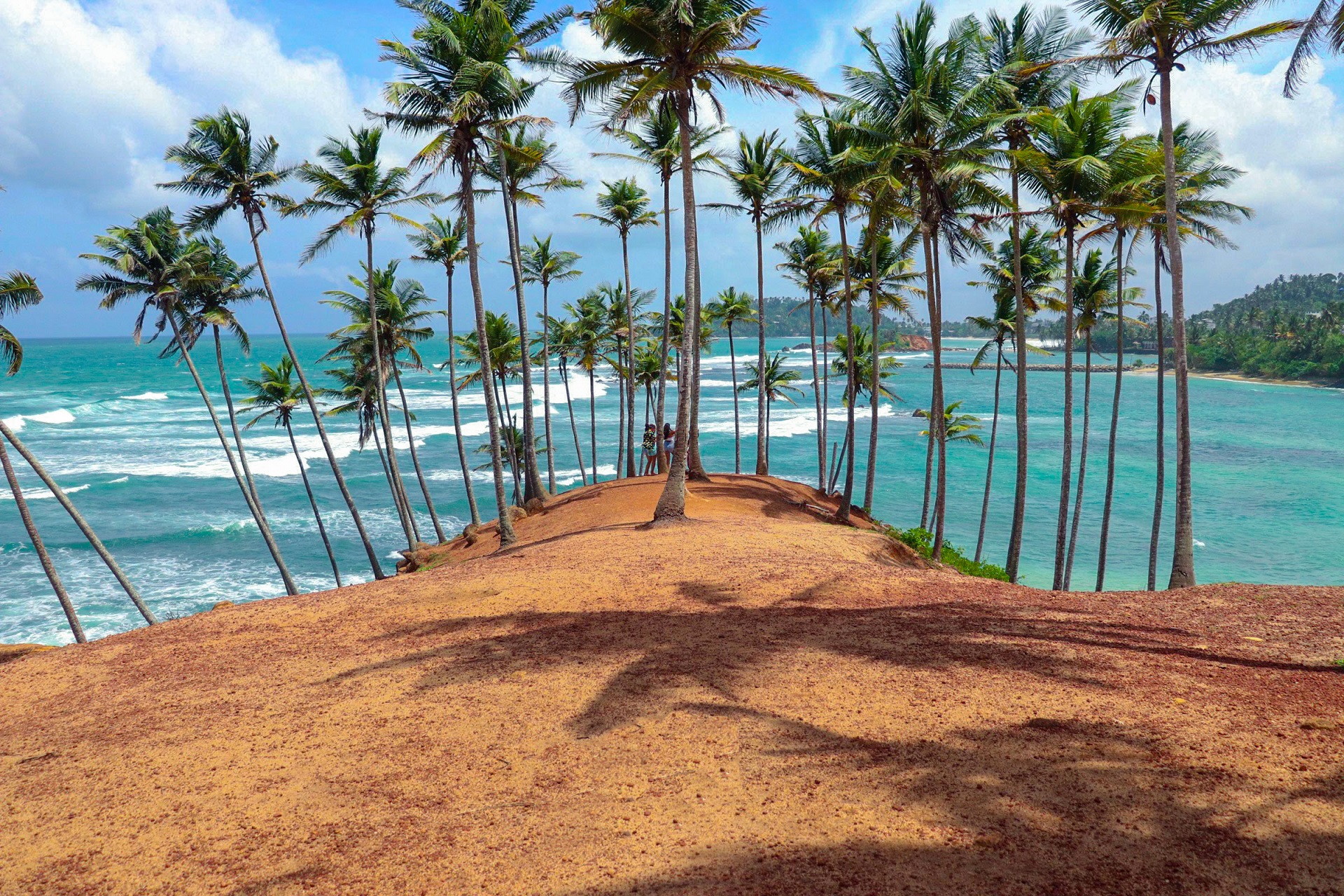
Nestled in tip of Weligama bay, the long lost Surf Shangri La for beginners and pros alike Mirissa is a hotspot for whale and dolphin watching. Visit secret beach, a small secluded beach tucked around the corner from the main beach, if you get there early enough you just might have it to yourself.

Ella

A charming town surrounded by breathtaking mountain views, Ella is a great place for adventurous souls, offering many popular spots to hike or trek: summit Mini Adam’s Peak or Ella Rock to witness a stunning sunrise, then visit the architectural wonder that is the Demodara Nine Arch Bridge and see a train pass which is always a delight even better when experienced at sunrise. Ravana falls is a mere 10 minutes from Ella township, which will not disappoint! It also hosts an amazing zipline experience stretching at 500m which will let you reach speeds of up to 80km/h.

Galle

In Galle, the Dutch Fort is a must-see, originally built by the Portuguese and conquered by the Dutch in the 17th century, today it is a UNESCO World Heritage sitealong with the adjoining Dutch hospital precinct that is now home to chic restaurants, cafes and boutique shops. 

Stroll along bluestone paved roads, visit a museum, peruse some jewelry and other trinkets, grab some gelato at a cafe or restaurant, take in the view of the ocean from the ramparts… there’s something for everyone!

Ahangama

A southern beach town where the only sounds you’ll hear are the waves hitting the shore and the palm trees swaying – is the ideal location for a serene and picturesque getaway.

You can do everything from taking up yoga or surfing, enjoying Ayurveda or wellness treatments, visiting turtle hatcheries or tea estate, and even learning or experience stilt fishing!

Hiriketiya Bay

A south bound surfing haven surrounded by quirky cafes and bars – is the perfect spot for a fun yet relaxing vacation under the island sun.

The best time to visit is between November and March when the waves and warmth are just right. The food and beverages with a local twist remain fantatstic around the year, of course!

Arugam Bay

Considered the surf capital of Sri Lanka, Arugam Bay is a world famous destination with breaks for Surfers of all skill levels complemented by Yoga lessons and mediation, Ayurveda and wellness spots, Beach parties and the well known hippie market.

Visit  Kumana National Park, a hidden delight of Sri Lanka hosting a very special eco system of wildlife and stunning scenery on the eastern coast of the island.

From ancient cities and kingdom to jungles and sandy beaches, here are few of the special places that present opportunities to celebrate travel at its finest.

Sigiriya

The 5th-century monolithic rock citadel and UNESCO World Heritage Site built during the time of King Kasyapa. This magnificent fortress embodies one of the best-preserved examples of…

From ancient cities and kingdom to jungles and sandy beaches, here are few of the special places that present opportunities to celebrate travel at its finest.

Sigiriya

The 5th-century monolithic rock citadel and UNESCO World Heritage Site built during the time of King Kasyapa. This magnificent fortress embodies one of the best-preserved examples of…

ROYAL FAMILY’S LOVE FOR SRI LANKAN GEMS

Sri Lankan gems have been a firm favorite amongst the Royal family, with the Queen choosing to wear the “Trumpet Brooch” on many an occasion. The “Trumpet Brooch” was gifted to Queen Elizabeth II by the Mayor of Colombo during her visit in 1981. The brooch encapsulates all that is Sri Lankan gems, with a variety of precious and semi-precious stones…

Sri Lankan gems have been a firm favorite amongst the Royal family, with the Queen choosing to wear the “Trumpet Brooch” on many an occasion. The “Trumpet Brooch” was gifted to Queen Elizabeth II by the Mayor of Colombo during her visit in 1981. The brooch encapsulates all that is Sri Lankan gems, with a variety of precious and semi-precious stones…

Sri Lankan gems have been a firm favorite amongst the Royal family, with the Queen choosing to wear the “Trumpet Brooch” on many an occasion. The “Trumpet Brooch” was gifted to Queen Elizabeth II by the Mayor of Colombo during her visit in 1981. The brooch encapsulates all that is Sri Lankan gems, with a variety of precious and semi-precious stones…

Sri Lankan gems have been a firm favorite amongst the Royal family, with the Queen choosing to wear the “Trumpet Brooch” on many an occasion. The “Trumpet Brooch” was gifted to Queen Elizabeth II by the Mayor of Colombo during her visit in 1981. The brooch encapsulates all that is Sri Lankan gems, with a variety of precious and semi-precious stones that are vibrant and facetted to precision. The “Trumpet Brooch” resembles a bouquet of flowers and was worn by her Majesty on many occasions during her tours around the world.

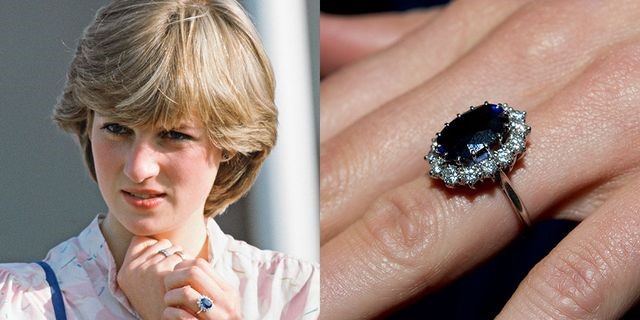
Her Majesty’s fondness for Sri Lankan gems is shared by the Royal family too. Did you know the famous blue sapphire at the heart of the engagement ring worn by the Duchess of Cambridge came from Sri Lanka 35 years ago? Prince William presented this ring to Kate Middleton in remembrance of his mother, Princess Diana who wore it as her engagement ring too.

The Stuart Sapphire, a blue sapphire that forms part of the British Crown Jewels. It weighs 104 carats (20.8 grams) and is believed to have originated from Asia, potentially, Sri Lanka.

FEW OTHER SRI LANKAN GEMS TREASURED AROUND THE WORLD

ROSSER REEVES STAR RUBY

Weighing some 138.7 carats, the Rosser Reeves Star Ruby is one of the world’s biggest and most precious star rubies. This Sri Lankan stone is famed for its striking colour and noticeable star pattern. Advertising mogul Rosser Reeves, whom this stone is named after, donated this to the Smithsonian National Museum of Natural History in Washington, D.C. in 1965.

QUEEN MARIE OF ROMANIA SAPPHIRE

The enormous 478.68-carat Sri Lankan blue sapphire was named after Queen Marie (1875-1938), the beautiful consort of King Ferdinand of Romania who originally bought this gem set as a drop to a diamond necklace for her just one year before his coronation. Queen Marie wore the splendid necklace for the coronation; it was a perfect match for her beautifully crafted sapphire tiara. On November 19, 2003, the gemstone appeared for auction at Christie’s Geneva under the title of “property of a noble family.” The buyer remains unknown to date.

THE EYE OF THE LION

It was in Pelmadulla in Sri Lanka where this 465 carat chrysoberyl cat’s eye gemstone was discovered in the late 1800’s. It was first owned by a family that descended from King Rajasinghe the First, who reigned supreme in the island nation during 1581 – 1593. There could hardly be a more appropriate name than “the Eye of the Lion” considering the legendary bravery of the King. After the Smithsonian Museum expressed interest in buying the gemstone in 1978, little was heard about it for the next three decades. The stone resurfaced in 2006 at the AGTA gemological testing center’s New York lab in the hands of the gem dealer Jeffery Bergman of Primagem, Bangkok, Thailand.

TIMUR RUBY

This 361 carat red spinel was discovered in Sri Lanka. The gem was first owned by the Mogul Emperors of India who got their name engraved on the stone. The Timur Ruby now finds its home among the crown jewels of Great Britain that are owned by Queen Elizabeth.

MAHARANI CAT’S EYE

The “Maharani Cat’s Eye” chrysoberyl amounts to 58.2 carats in weight. The golden honey color and the sharp eye makes it an extraordinary rare and fine jewelry piece. Discovered in Sri Lanka, the size, colour and transparency as well as the sharpness of the eye make it a rare and very important gemstone. It’s currently on display in the Smithsonian National Museum of Natural History in Washington, D.C.

Sri Lankan gems have been a firm favorite amongst the Royal family, with the Queen choosing to wear the “Trumpet Brooch” on many an occasion. The “Trumpet Brooch” was gifted to Queen Elizabeth II by the Mayor of Colombo during her visit in 1981. The brooch encapsulates all that is Sri Lankan gems, with a variety of precious and semi-precious stones…

Sri Lankan gems have been a firm favorite amongst the Royal family, with the Queen choosing to wear the “Trumpet Brooch” on many an occasion. The “Trumpet Brooch” was gifted to Queen Elizabeth II by the Mayor of Colombo during her visit in 1981. The brooch encapsulates all that is Sri Lankan gems, with a variety of precious and semi-precious stones…

Translate »